

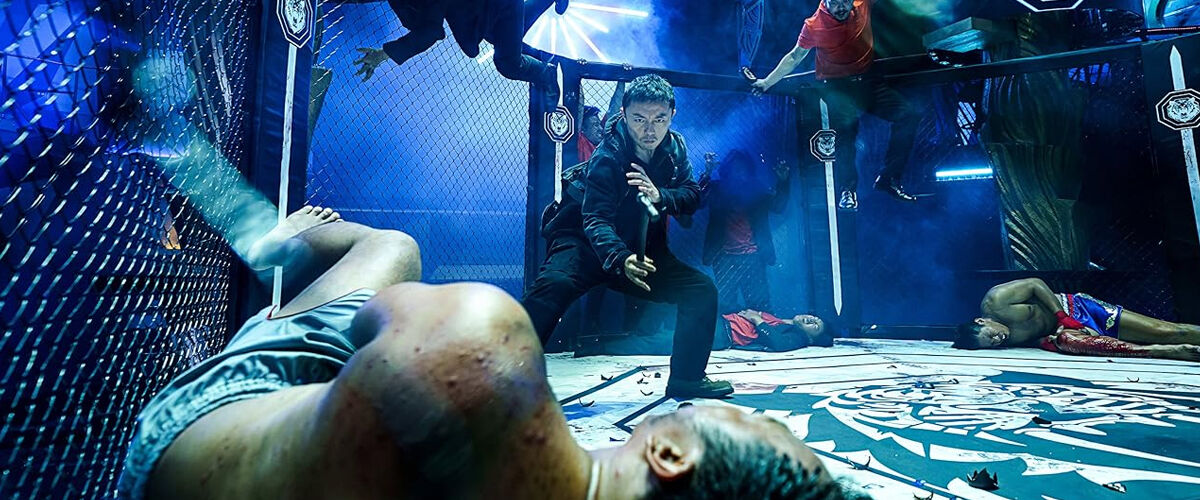
On paper, The Furious begins with a premise audiences have seen countless times before: a man’s daughter is kidnapped, and he sets out on a violent mission to get her back. It is the kind of setup that has powered decades of revenge thrillers, from Taken onward, where personal loss becomes fuel for relentless action.
But while the story may sound familiar, The Furious is not trying to reinvent narrative structure. Instead, it commits fully to something far more immediate and visceral: action as spectacle, choreography as storytelling, and momentum as its primary emotional engine.
Familiar Story, Different Intent
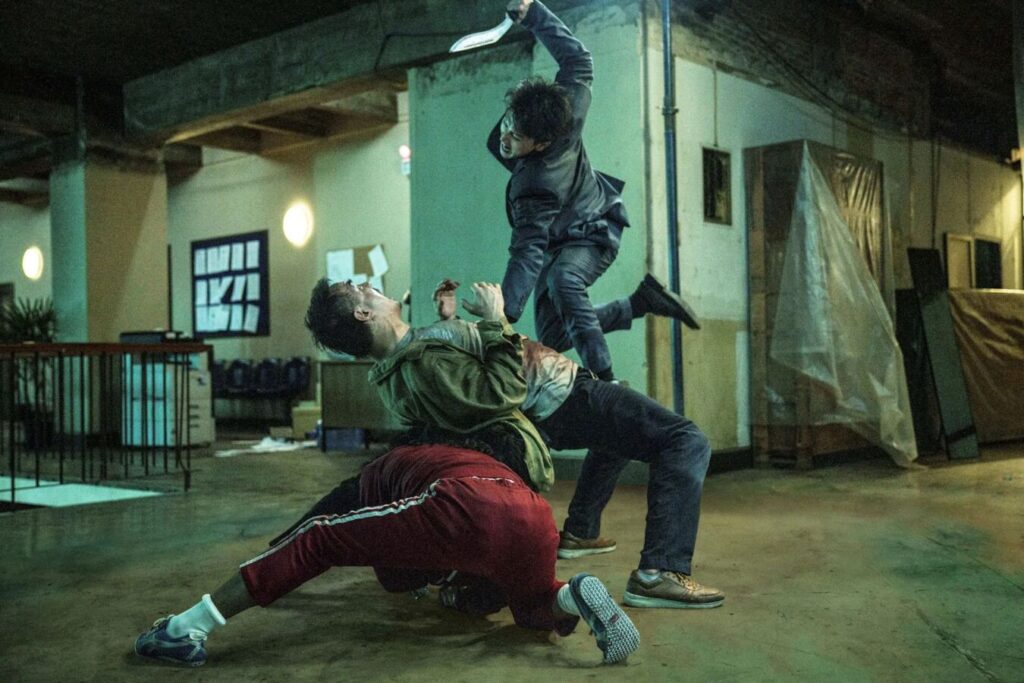
At its core, the film follows Wang Wei (Xie Miao), a mute handyman drawn into a rescue mission after a child trafficking syndicate abducts a young girl named Rainy (Yang Enyou). He is joined by Navin (Joe Taslim), whose own personal stake in the situation ties him to an investigative journalist who has gone missing while pursuing the same criminal network.
This setup provides just enough narrative scaffolding to move from one confrontation to the next. The dialogue is minimal, the exposition functional, and the emotional beats deliberately restrained. Rather than building complexity through plot, the film channels everything into physical performance.
Any attempt to compare it directly to Taken quickly becomes irrelevant. Where that film relied on the illusion of a capable aging protagonist, The Furious instead leans into pure martial arts credibility, showcasing performers who are not only convincing fighters on screen, but genuine practitioners of combat disciplines.
Kenji Tanigaki’s Action Philosophy in Full Effect
Director Kenji Tanigaki brings decades of stunt coordination experience into the project, and it shows in every frame. Having worked on films like SPL: Sha Po Lang, Flash Point, and Snake Eyes: G.I. Joe Origins, he is no stranger to tightly choreographed, close-quarters violence.
Here, working on an English-language Hong Kong production shot in Thailand, he pushes that style further. The result is a film that feels engineered around movement rather than dialogue or exposition.
Every fight sequence is designed with clarity of intent. There is no hesitation in editing choices, no attempt to obscure impact with excessive cuts or shaky camerawork. Instead, the camera stays close enough to feel the strikes while still allowing the choreography to breathe.
A Cast Built for Combat, Not Just Characters
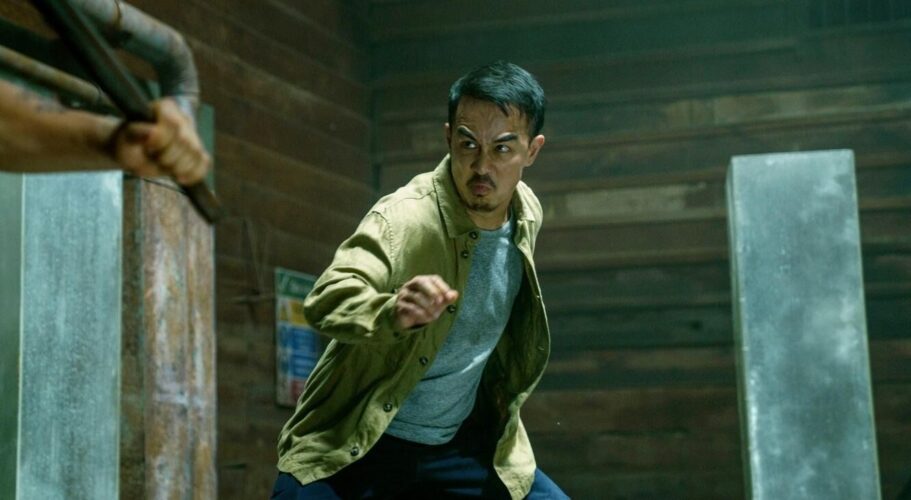
One of the film’s strongest assets is its cast of martial artists and action specialists drawn from across Asia and beyond. Xie Miao brings a grounded physical presence shaped by years of martial arts performance, while Joe Taslim adds fluidity and precision rooted in his taekwondo and pencak silat background.
Their fighting styles contrast in a way that becomes visually expressive. Xie’s movements are compact and controlled, emphasizing impact and timing. Taslim’s approach is looser, faster, and more fluid, turning each exchange into a shifting rhythm rather than a rigid pattern.
Supporting performers like Brian Le and Yayan Ruhian further expand the film’s physical vocabulary. Le’s slower, heavier brutality contrasts sharply with Ruhian’s unpredictable intensity, while Joey Iwanaga adds speed and agility to the mix. Even when characterization is thin, each fighter is given a distinct physical identity.
Story as a Frame for Violence
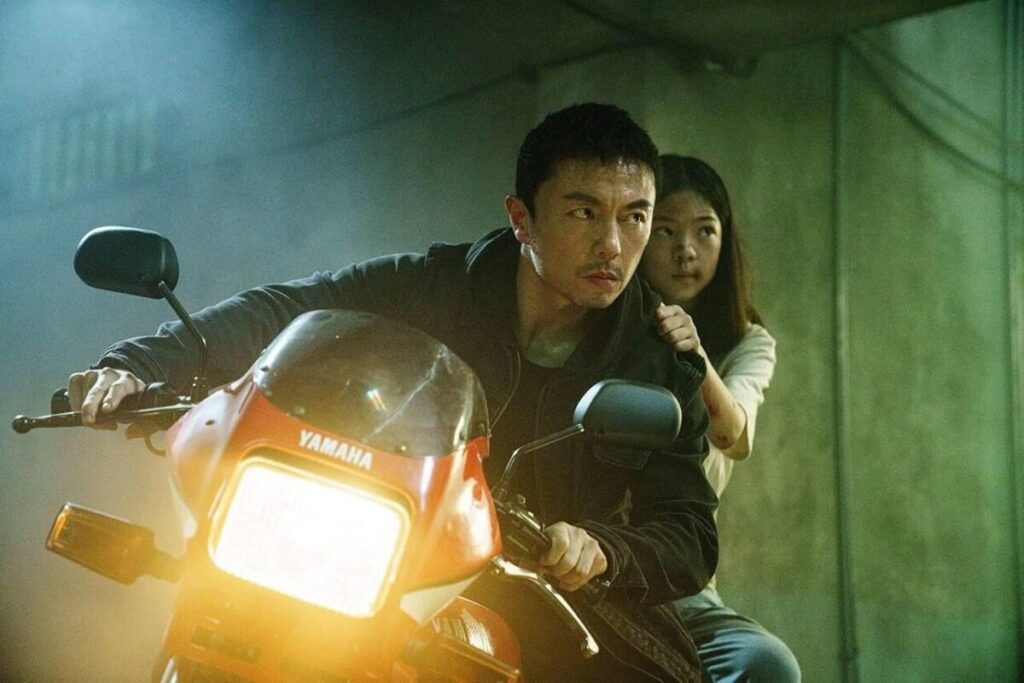
Narratively, The Furious is intentionally minimal. Wang Wei’s role as a mute protagonist reduces dialogue dependency and shifts focus entirely onto expression through movement and reaction. His relationship with Rainy provides the emotional backbone of the film, but it is conveyed more through gesture and presence than through traditional dialogue-driven development.
Occasionally, the film gestures toward broader themes such as corruption, exploitation, and fractured family bonds. However, these ideas remain secondary to the choreography. They exist more as emotional context than as fully explored narrative arcs.
Even the buddy dynamic between Wei and Navin follows this pattern. Their relationship evolves through shared combat and survival rather than extended conversation, with Taslim’s character serving as a bridge between Wei’s silence and the external world.
When the Film Fully Lets Go
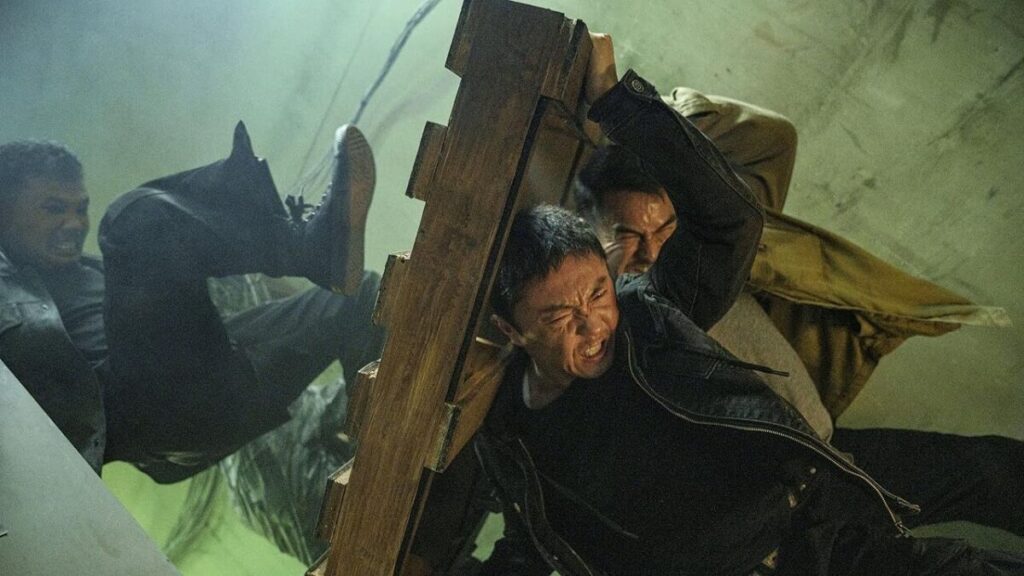
Where The Furious truly distinguishes itself is in its large-scale ensemble fights. Once multiple factions collide, the film shifts into extended sequences of controlled chaos where survival depends entirely on adaptation and improvisation.
These moments showcase the film’s most inventive choreography. Weapons become extensions of the body rather than static tools, environments are actively used rather than ignored, and movement becomes continuous rather than segmented into isolated encounters.
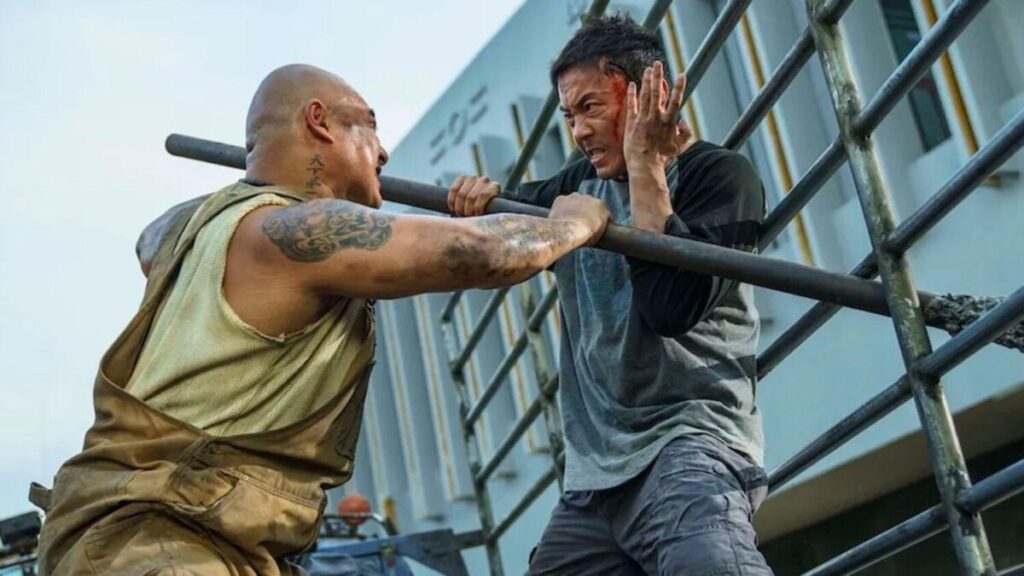
Ladders, bicycles, improvised weapons, and acrobatic transitions all appear in sequences that prioritize creativity over realism. Injuries are often shrugged off, and physical limits are pushed far beyond plausibility, but within the film’s internal logic, this exaggeration becomes part of the entertainment rather than a flaw.
The influence of films like The Raid is clearly present, particularly in how sustained physical intensity replaces traditional narrative escalation.
Practical Effects and Physical Authenticity
One of the film’s most effective choices is its reliance on practical effects. Impacts feel tangible, collisions carry weight, and stunt work is allowed to remain visible rather than hidden behind digital enhancement.
This approach enhances the sense of immediacy. Even when the violence becomes extreme—featuring stabbing, dismemberment, and close-range brutality—the physicality of the performers keeps the action grounded in a recognizable reality.
The editing supports this approach with a rhythm that favors clarity over fragmentation. While the pace can become overwhelming in later sequences, the consistency of style ensures that the viewer is always oriented within the action.
Weaknesses in the Margins
Outside of its combat design, The Furious shows clear limitations. The English-language dialogue often feels unnatural, and some vocal dubbing choices detract from immersion. CGI elements occasionally lack polish, standing in contrast to the otherwise tactile physical work.
Story progression is also uneven. Certain narrative resolutions feel abrupt or overly convenient, and character development is frequently sacrificed in favor of maintaining forward momentum.
However, these weaknesses rarely derail the experience because the film is not built around narrative depth in the first place. Its priorities are clear from the outset.
Final Verdict: Controlled Chaos with a Clear Purpose
Ultimately, The Furious succeeds by fully embracing what it is: a martial arts action film that prioritizes choreography, physical expression, and kinetic intensity over narrative complexity.
It does not aim for realism or emotional subtlety in the traditional sense. Instead, it delivers a tightly constructed sequence of escalating fights that showcase some of the most skilled performers in contemporary action cinema.
What remains after the credits is not a complicated story or a layered thematic statement, but a sense of sustained adrenaline. In that regard, the film accomplishes exactly what it sets out to do.
Sometimes, the simplest promise—relentless, well-executed action—is more than enough.