

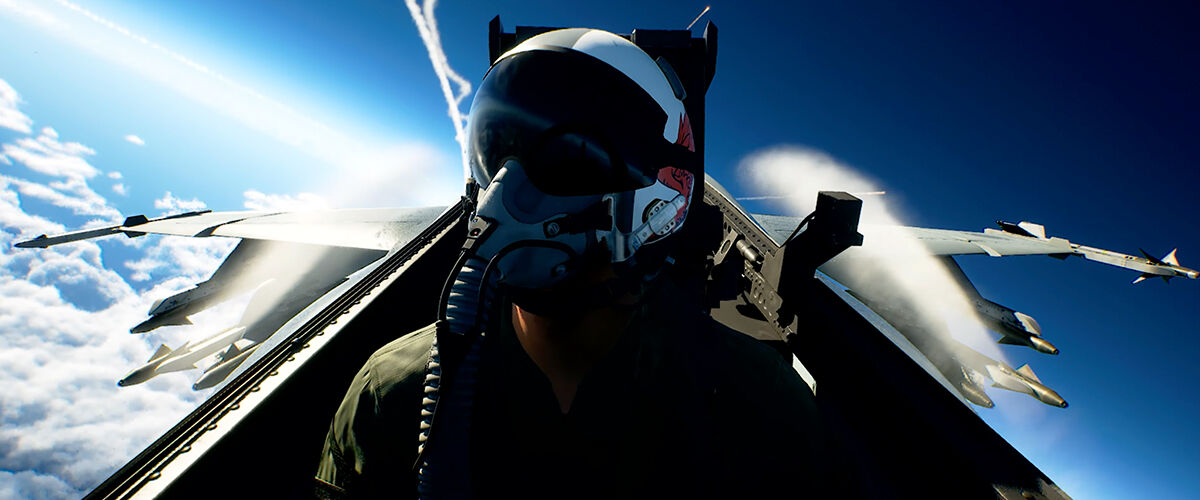
Few gaming experiences capture pure adrenaline quite like sitting in the cockpit of a fighter jet, engines roaring, missiles locking, and clouds tearing past your canopy at impossible speeds. It’s a fantasy that films like Top Gun have brought to life on screen, but video games remain the only medium where players can truly take control—where every split-second decision determines survival or defeat.
For decades, one franchise has consistently defined that experience: Ace Combat. Sitting comfortably between hardcore simulation and arcade accessibility, the series has carved out a unique identity—one that blends cinematic storytelling with high-intensity aerial combat.
Now, with Ace Combat 8: Wings of Theve, Bandai Namco is preparing to take its flagship series into a new generation. Built using Unreal Engine 5 and powered by a new proprietary system known as “Cloudly,” the upcoming title promises not just visual upgrades, but a fundamental evolution in how aerial combat feels and functions.
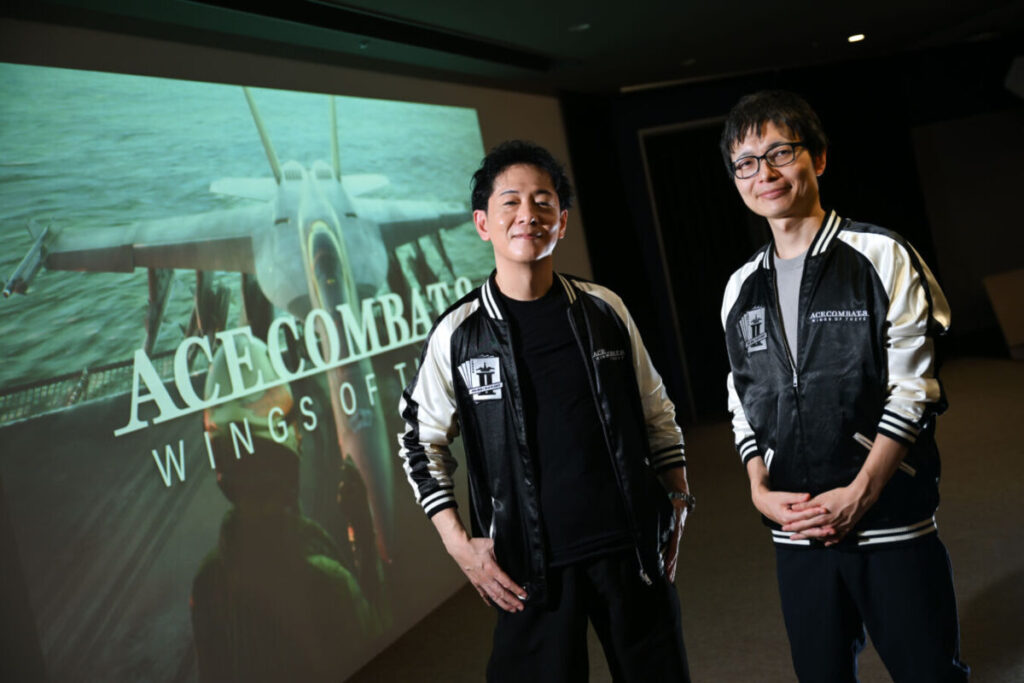
In an extended conversation, series brand director Kazutoki Kono and producer Manabu Shimomoto shared insight into how the team is approaching this leap forward—and why Ace Combat 8 may be the most ambitious entry yet.
“We’re Not Just Upgrading Graphics — We’re Redefining the Sky”
When asked about the transition to Unreal Engine 5, Shimomoto is quick to clarify that this isn’t just a technical upgrade—it’s a philosophical shift in how the game is built.
He explains that the sky itself has always been the defining element of Ace Combat. Unlike many other genres, where environments serve as backdrops, here the sky is the battlefield, the obstacle, and the storytelling canvas all at once.
With Unreal Engine 5, the team finally has the tools to treat it that way.
He points to scale as one of the most immediate changes. The playable area in Ace Combat 8 stretches across roughly 10,000 square kilometres—something that simply wasn’t possible before. But scale alone isn’t the point. What matters is how that space feels when players move through it.
This is where Cloudly comes in.
The Evolution of Clouds Into Gameplay Systems
Cloud rendering might sound like a purely visual feature, but in Ace Combat, it has always been deeply tied to gameplay. In Ace Combat 7, clouds already influenced visibility, targeting systems, and aircraft control. Players weren’t just flying through them—they were reacting to them.
Shimomoto describes Cloudly as the natural evolution of that idea.
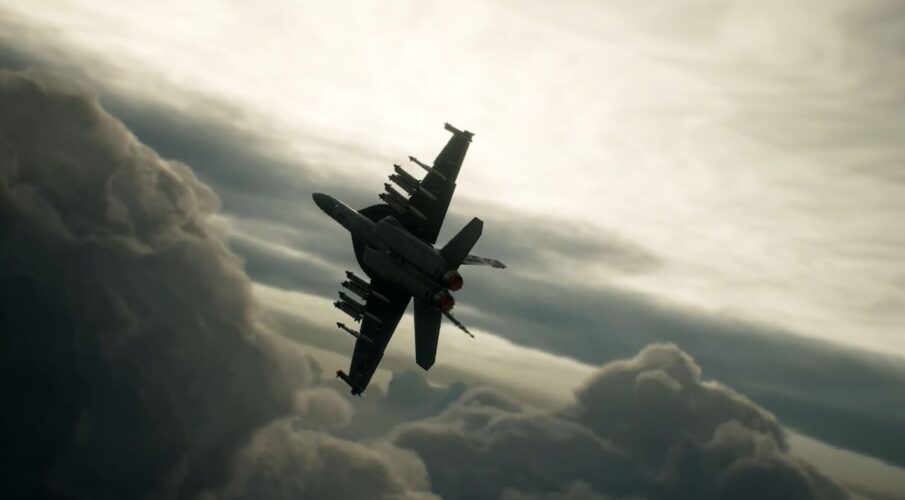
Instead of single-layered cloud systems, the new technology allows for complex, multi-layered formations that behave dynamically. Contrails linger in the sky, jet exhaust distorts the air, and sunlight reflects realistically across cockpit surfaces.
But more importantly, these elements now function as tactical tools.
He explains how players can use cloud layers to estimate altitude, track enemy movement, or manipulate visibility during dogfights. Entering a cloud at the right moment can break a lock-on, but it can also disorient the player. Timing becomes critical.
Even something as subtle as the delay between two aircraft entering and exiting cloud cover can reveal distance and positioning. It’s not just about what players see—it’s about how they interpret what they see.
“Realism Isn’t About Complexity — It’s About Logic”
Kono expands on this by shifting the conversation toward realism. He’s careful not to equate realism with difficulty or simulation-heavy mechanics. Instead, he frames it as consistency in how the game world behaves.
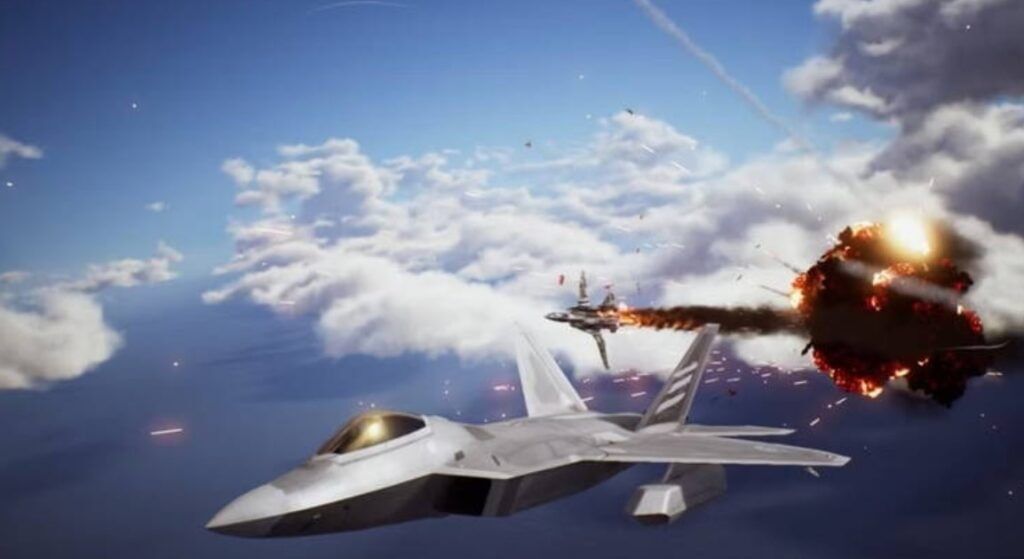
He gives an example from the trailer: a large aircraft being shot down and crashing into another jet mid-air. Moments like that aren’t scripted set pieces—they emerge from the game’s internal logic system.
For the team, this represents a major step forward. Previous entries relied more heavily on controlled scenarios. Now, interactions between objects, physics, and environmental factors create outcomes that feel organic.
Kono describes it as building a system where events don’t just happen—they make sense when they happen.
This philosophy extends beyond aerial combat.
Rethinking Air-to-Ground Combat
While dogfighting remains the core of Ace Combat, the team has also revisited air-to-ground gameplay, an area often overshadowed by aerial encounters.
Kono admits that this aspect has been refined, though he remains intentionally vague about specific mechanics. Instead, he offers situational examples to illustrate the shift.
Imagine approaching a ground target hidden beneath dense cloud cover. Players are now forced into a decision: descend into the clouds and risk losing visual clarity, or stay above and expose themselves to enemy defenses.
Neither option is inherently correct. Each carries consequences shaped by the environment.
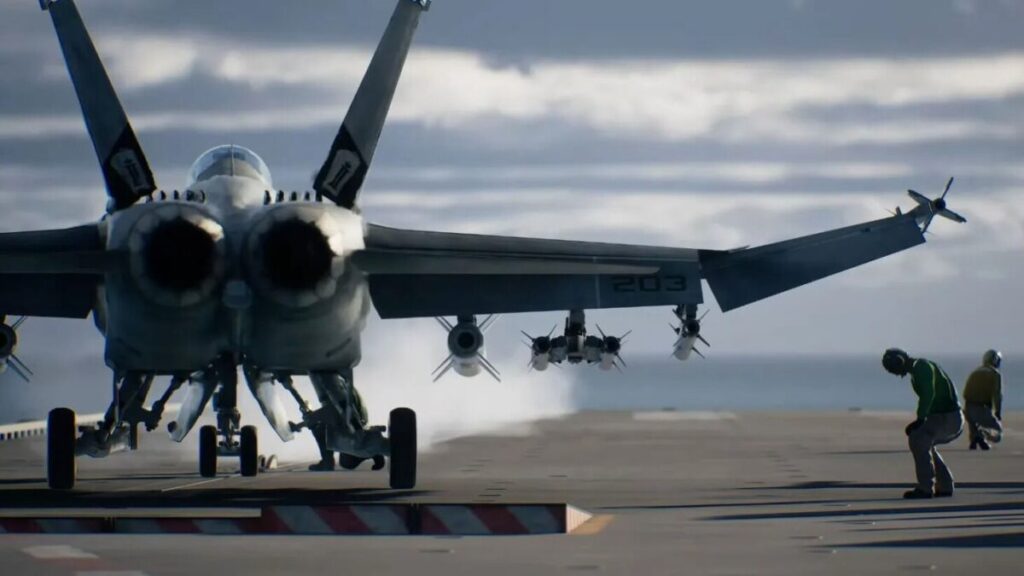
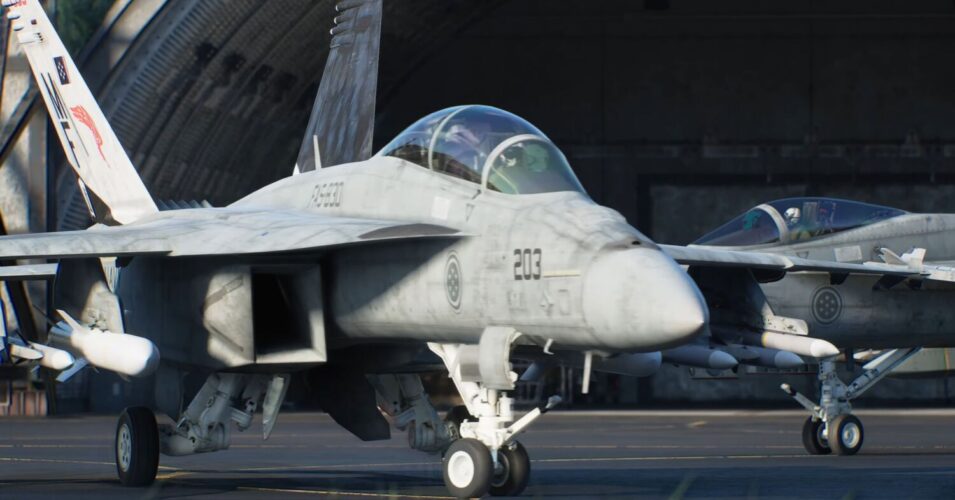
He also mentions smaller details—like the physical feedback when a jet’s wing grazes the deck of an aircraft carrier. These moments may seem minor, but they reinforce the idea that the world responds to player actions in tangible ways.
Accessibility Versus Authenticity
With all these changes pushing the game toward greater realism, a natural concern arises: will Ace Combat 8 become too intimidating for newcomers?
Shimomoto doesn’t dismiss the concern. In fact, he acknowledges it directly.
Learning to control a fighter jet—even in an arcade-style game—comes with a learning curve. The team understands that increasing systemic depth could amplify that challenge.
Their solution is not to simplify the experience, but to support players through it. Tutorials and onboarding systems are being expanded to help new players understand both the controls and the underlying logic of the game.
The goal is not to reduce complexity, but to make it approachable.
A More Intimate Story in a Larger War
Narratively, Ace Combat 8: Wings of Theve takes a different direction from its predecessor. While Ace Combat 7 focused on large-scale warfare, the new entry begins from a more personal perspective.
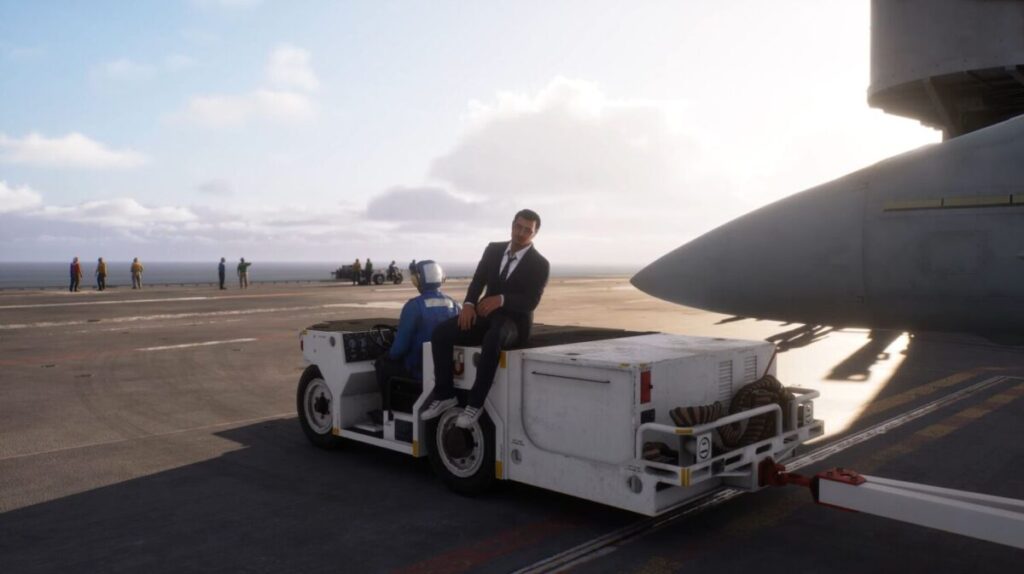
Players take on the role of a downed pilot rescued by an aging aircraft carrier known as the Endurance. From this confined starting point, the story gradually expands outward.
Kono hints that this structure is intentional. The aircraft carrier acts as both a narrative anchor and a launching point. It grounds the player before opening the world into something much larger.
He avoids revealing too many plot details, but emphasizes that the story is designed to evolve—starting small, then gradually revealing its true scale.
At its core, it continues the series’ long-standing theme: exploring how war and technology intersect, and how individuals navigate that intersection.
“We Always Start With One Question: What Would This Feel Like in Reality?”
As the conversation winds down, Kono returns to a central idea that has guided the series for decades. Every new entry begins with a question—not about spectacle, but about plausibility.
What would aerial combat feel like if it existed within the rules of this world?
That question shapes everything—from flight mechanics to environmental systems to narrative tone. With Ace Combat 8, the tools have finally caught up to the ambition behind that question.
Unreal Engine 5 and Cloudly are not just technological upgrades. They are enablers of a vision the team has been refining for years.
Looking Ahead to 2026
With a release planned for 2026 on PlayStation 5, Xbox Series X|S, and PC, Ace Combat 8: Wings of Theve represents more than just another sequel. It is a turning point for the franchise—a moment where past design philosophy meets modern capability.
What the team is building is not simply a bigger Ace Combat, or a prettier one.
It is a more responsive, more dynamic, and more immersive interpretation of aerial combat—one where the sky is no longer just a setting, but a system players must learn, read, and ultimately master.
And if Kono and Shimomoto’s vision holds true, it may redefine what players expect from flight action games for years to come.